Sunday, July 26, 2020

Quiz 4

1) Umut Uras. “Turkey turning Hagia Sophia back into mosque divides social media.” Al Jazeera. July 11, 2020, https://www.aljazeera.com/news/2020/07/turkey-turning-hagia-sophia-mosque-divides-social-media-200711104417533.html


Who really cares what they’re saying on social media. The real issue is the converting a world monument and iconic place into a religious place of worship. This debate had already taken place many years ago so why does Erewhon feel we need to go back-and-forth. Originally the Byzantine Empire built the church in as a cathedral in Constantinople in 537 A.D.  It was the largest church in the eastern Roman Empire for many years. It functioned as a church for almost 1000 years until it fell to the Ottoman Empire in 1453. After the conquest of Constantinople, the Turkish eventually converted it to a Muslim mosque. If the recent decisions materialize it will be a very sad day for the world since not everyone will get to enjoy this world’s gem. 

The issue is far greater than social media. Sure it is today’s way of expressing yourself, however, it does very little actual impact on governmental decisions. I would suggest that everyone who has an opinion on social media not just say their opinion but actually act on it. Putting words into action is in the real way to in act change. This is the only way we can revert certain decisions that have been made. 


2) Anne Mawathe. “Coronavirus: Why Africans should take part in vaccine trials.” BBC. May 18, 2020. https://www.bbc.com/news/world-africa-52678741


Apparently, the Corona virus vaccine trial on Africans controversy began in April of 2020, but it seems to have been a strict over reaction to an idiotic statement. The controversy was sparked by two French doctors while they discussed a vaccine trial that was occurring in Europe and Australia. The trial was looking into whether a tuberculosis vaccine would work against the corona virus. The comment made by one of the French doctors was insensitive but I have a feeling he meant well. His comment, although inappropriate, was meant to address the little resources some parts of Africa have. It is well documented that after a vaccine is created, it often ends up in wealthier countries who are willing to pay for it. Some parts of Africa also lack the capital investment, which makes the advancement in medicine difficult. Many of their own doctors seek careers elsewhere taking there wealth of knowledge with them. It would be good if the World Health Organization (WHO) created an avenue for investment in Africa. 


It’s very true that African people have been used in the past on experimental drugs and in some cases causing serious side affects or disabilities. Even though the comments were insensitive, they may not have been as derogatory as everyone assumed. 


3) Ganesh Chakravarthi. “Is it Time to Embrace the Anthropocene? The Anthropocene requires that humanity take responsibility for preserving the earth and its species.” The Diplomat. February 11, 2020. https://thediplomat.com/2020/02/is-it-time-to-embrace-the-anthropocene/


It is time for us to embrace Anthropocene. As the article says it will take hundreds of years to revert any damage to the earth so we have to act now. The current state of our planet did not happen overnight. We have been burning fossil fuels for over 200 years, particularly, since the industrial revolution. It took hundreds of years if not thousands to get to where we are. Some of the carbon emissions damage, however, has occurred in the last 200 years. If we embrace and truly learn about Anthropocene we can begin to change human behavior. It will be very difficult to change peoples habits if we don’t embrace Anthropocene and make everyone aware of the movement. We saw a real change in the environment when Canada created the emissions and fossil fuels act. Within a couple of decades we notably saw a difference in the ozone. 


If we had remained hunters and gatherers and lived off the land we probably would not be facing this epic destruction of the earth. We need to rally around this movement and let it be known if we are to save our planet.

Friday, July 24, 2020

Module 10 - Chapter 23

Factors which contributed to the economic globalization in the second half of the twentieth century were the organization of the World Bank and the International Monetary Fund. This created the United States as the central point for the economic currency. This was established during a conference in Bretton Woods, New Hampshire.  

Additionally, the development of containerized shipping, large oil tankers, and express air services dramatically lowered the cost of shipping goods. This new more connected world economy vastly favored the reduction of tariffs, promoted global capital investment, created a new mobile workforce, and the privatization of many government run enterprises. This new global market operation and within nations was the most expansive and effective means for the world economies.   

The global North/South divide found expression in the past century by creating a huge disparity between the have’s and have not’s. The global expansion has not been equal to the North and South. As North America and Europe gain power over the South by investing in capital and entrenching themselves in the economy. As the economy grew for the North, it has worsened for those in the south. For example, the United States invested heavily in Mexico and China because of cheaper labor. This meant that companies from the North would get rich off of the poor people in those other countries. Even the financier and investor George Soros, said globalization has created a disparity and divide where the rich have gotten richer and the poor poorer. 


References: 


Robert W. Strayer, Eric W. Nelson - Ways of the World_ A Brief Global History with Sources, Combined Volume (2015, Bedford_St. Martin’s) - libgen.lc.pdf


https://fr.wikipedia.org/wiki/Bretton_Woods_(New_Hampshire)#/media/Fichier:Mount_washington_hotel_1905.jpg


https://www.airseacontainers.com/blog/what-are-shipping-container-dimensions/


https://www.britannica.com/biography/George-Soros

Module 10 Chapter 22

International circumstances and social changes which contributed to the end of colonial empires included a new found belief that independence was the key to self identity and prosperity. Dictatorship based on colonial rule did not work anymore because it was opposite to what Europeans practiced and operated under at home. American colonialism ending, helped around the world but also, more recently, Mexico’s independence and divestiture of  United States and British controlled oil in their own country played a big role.  One country at a time began to cease colonial rule. Self-national determinations were more favorable. 


Second and Third generation highly educated, mostly men, knew Colonization was not the only way to progress. These young educated people had witnessed European and democratic ways, and knew national independence was the key to economic and social progress. They insisted on immediate independence. As the book describes on page 979, independence promised national freedom but also personal dignity, abundance, and opportunity. 


The Colonial experience and the struggle for independence shaped the agenda of developing countries in the second half of the twentieth century in different forms. It was not always done seamlessly nor was it streamlined. It took many months and years of intense negotiations.  One of the struggles was in identifying what group should remain in charge once decolonization took place. We’ve seen this in recent times during the Arab Spring of 2011. People wanting independence but once they achieved the independence they fought internally for power primarily between the Sunni and Shiite people. Nevertheless, decolonization required gradual political reforms and investments. Many small countries who sought independence found it difficult to be self sustaining so they joined established larger established countries. One example was the Polynesian islands joining the United States.   


References: 


Robert W. Strayer, Eric W. Nelson - Ways of the World_ A Brief Global History with Sources, Combined Volume (2015, Bedford_St. Martin’s) - libgen.lc.pdf


https://oilprice.com/Energy/Crude-Oil/Can-Mexico-Reverse-Its-Steep-Output-Decline.html


https://wayback.archive-it.org/11788/20200107171921/http://exhibitions.nypl.org/africanaage/


https://www.cnn.com/2016/11/21/africa/chinese-funded-railways-in-africa/index.html

Thursday, July 23, 2020

Module 9 - Chapter 21

Communism exercise influence during the twentieth century was primaraly associated in Russia, China and Mongolia. In the after math of World War II as Japan was defeated Russia was able to influence areas such as the northern part of Korea. This is one of the main reasons North Korea was established as a communist country. Russia being the larges country by size and China being the larges by population made it so almost one third of the world power were communist by the 1970s. Mongolia was another large proponent of communism. 

Karl Marx was one of the people to establish communist social equality and social development. Some would argue Karl Marx was a philosopher but others will say he was a revolutionary. He analyzed the theory of the value of labor and service value. He felt that at some point ones labor is not worth the effort as others become wealthier and there for a communist state where everyone receives the same allotment would suit people best in the long run. 

(Karl Mark - Philosopher or Revolutionary) 

The communist experiment, which was committed to equality, abundance, and a humane socialism, generate failed economies and oppressive, brutal, and totalitarian regimes because it was not sustainable. It did not generate equality for everyone. It gave poor people, who were the majority, just enough to live and a fewer wealthier people more than there share. Inherently communism works for the leaders of government and the people in power. Marxist ideology spoke about equality however they had routinely exploited the poor laborers and women. Socially people were not equal. If you were a person of power, you had more rights and wealth and if not you had nothing to show for yourself nor did you have similar rights. This disparity is what caused many of the revolutions. By the 1970 many of the communist countries began to cease but it wasn’t until the 1990’s until the full light was shed on communism and what a failed government it could be for common people.  


References:

Robert W. Strayer, Eric W. Nelson - Ways of the World_ A Brief Global History with Sources, Combined Volume (2015, Bedford_St. Martin’s) - libgen.lc.pdf

https://plato.stanford.edu/entries/marx/

Wednesday, July 22, 2020

Module 9 - Chapter 20


Several aspects of Europe’s nineteenth-century history contributed to the First World War. Some of them included the Serbian nationalist assassinating the heir to the Austro-Hungarian throne, the great power of Europe competing for colonies, and spheres of influence and superiority. As well as the growing arms race in naval warships especially between Germany and Britain. During this time the Western world was trying to find it’s place in the world’s stage. The fact that area was in such close proximity made it easy to be insecure about each other’s might and who would be first in the worlds order.  


The disasters that best explain the losses Europe endured in the first half of the twentieth century are the real insecurities and the struggle to prove each country’s superiority.  The fact that they practiced and published what each other would do in case of war mounted even greater fears over each other. It was inevitable that war would eventually breakout. Because of these tensions over ten million men died during the conflict that followed. Europe was devastated during the First World War, so much so, that they lost their stage in the world order. Even though alliances were created throughout Europe, the United States replaced them as the new super power. Another disaster in Europe and in the world was the great depression, which ruined many fortunes. It would take Europe several decades to regain the position they lost in the worlds order. In many ways they are still second to the United States. 

Tuesday, July 21, 2020

Module 8 - Pandemics

Pandemics


Humanity has been battling pandemics like the Corona Virus or COVID-19 for many millenniums. Overtime, the planet has seen many mutations of viruses and we have always figured out a way to coexist. Many plagues have been well recorded. Two in particular are the plague of Afro-Eurasian and the Small Pox pandemic in Mesoamerica. Both have similarities to the novel Corona Virus. 


The Afro-Eurasian pandemic began in China in 1331 and wiped out about 50% to 90% of the population. By some account about half of the European population died from the disease in just the first two years.  The disease was so deadly, it was coined the Black Death. This disease was carried by rodents and transmitted to humans by fleas, a resemblance to the Corona Virus, almost 700 years later, traveling from bats and making the leap in the genome to humans. Basically, transferring from animal to human. The Black Death took about 50 years to get to East Africa. It’s believed it was brought there through the Chinese maritime expeditions. Another similarity to how the Corona Virus traveled in a matter of months from China to the United States via modern air travel. 


The second devastating pandemic was the Small Pox pandemic that swept though Mesoamerica with the arrival of the Spanish Monarchy. The Spanish brought diseases the native people of Mesoamerica had not been exposed to. Diseases brought to the continent were Smallpox, Measles, Typhus, Influenza, Malaria, and Yellow Fever. Influenza is one of those virus that has mutated overtime and generally attacks the respiratory track similar to Corona Virus. It is unknown whether it was a form of the Corona Virus. Either way, without modern medicine many people perished. Some estimates say approximately 9 out of 10 people died. The time became known as the Great Dying. The similarity to the Corona Virus is that others brought the diseases to the “new world”. 


Living in Mexico for the first few years of my life, I’m a walking example of the Smallpox vaccine given to every Mexican child, most likely because of the Great Dying era. It’s been 400 years and people still fear that time period. I have a scar on my right shoulder from the vaccine but at least I’m safe of that. 


The Corona Virus pandemic of 2020 has turned our world upside down. We were a thriving country full of energy, confidence, and hope. Only 6 months ago, we were all out enjoying the nice California weather. We had good paying jobs. We were eating and hanging out, enjoying the latest beer gardens. We were confident of our finances and future. Many of us hoped to walk the stage this past May and graduate along side other students who have sacrificed to return to school in hopes of a better life. The Notre Dame de Namur graduation did not happen. Many people have lost their jobs. Confidence has hit an all time low. What a difference six months and one pandemic can make. If only there were a vaccine, I would sacrifice my other shoulder for a scar just so we can all get back to a normal life.   


References: Robert W. Strayer, Eric W. Nelson - Ways of the World_ A Brief Global History with Sources, Combined Volume (2015, Bedford_St. Martin’s) - libgen.lc.pdf

Monday, July 20, 2020

Our State of the Union on this day July 4th, 2020

Our State of the Union on this day July 4th, 2020. Throughout the text book we read about “enlightenment”. From the Buddhist challenges in and around 486 B.C.E. and numerous Chinese rebellions, to the Western World and the Columbus voyages, have all experienced “enlightenment”. Most recently for our young Country it was the Atlantic revolution where the idea of liberty and equality were most prominent and our founding fathers were enlightened. 


As is well documented, the founding fathers were disillusioned with the Government and how poorly represented they were by the Kingdom of Great Brittan. It was because of the above that the citizens rebelled and said enough. They declared independence from the Great Brittan and were specifically upset with King George III. They were upset because the British levied additional taxes on the Colonies, “…seeking new revenue from its landowners.” as the text describes on page 702. The actions of taxation without representation caused the launch of the North American revolution.  


“As the Englishman John Locke (1632–1704) had argued, the “social contract” between ruler and ruled should last only as long as it served the people well.” This way of thinking emboldened the Colonies to take matters into their own hands. One can also make the conclusion that the Atlantic revolutions further motivated the Colonies to organize against the established rule and establish their own democratic revolutions.   


The Colonies made the bold statement to declare independence from Great Brittan with the Declaration of Independence on July 4th, 1776 approximately one year after the war between the Colonies and Great Brittan had began. The Colonists were especially upset with King George III, so much that they wrote about his total disregard for this segment of English people inside the Declaration of Independence. 


Everything in chapter 16 seems to be a repeat of what is happening in the current state of the nation. People are upset that they are not well represented. People do not feel safe, as is written in the Declaration of Independence. People understand, even though men were created equal, men do not have equal rights and they are fed up. The Nation has seen this in all of the recent protest and calls for justice. People of this nation are still struggling with the similar issues as they were 244 years ago. They still are rebelling against a “King George III” who would not listen to their outcry. King George III was cruel and only cared about using the colonies for his own good. Very similar to the current United States President abusing his power and using immigration as a tool for political gains.  


One of the passages in the Declaration of Independence states, “… He has endeavored to prevent the population of these States for that purpose obstructing the Laws for Naturalization of Foreigners; refusing to pass others to encourage their migrations hither and raising the conditions to new Appropriations of Land...” The passage is similar to the current president’s way of thinking. 


One can only wonder if we are experiencing the beginning of a modern revolution where people are tired of not being heard, not feeling safe, not being represented, and feeling oppressed by it’s “leader.”  

The nation currently celebrates its independence on July 4th even though the United States of America was not recognized as independent from Great Brittan until September 3, 1783. One can only wonder if we are seeing the makings of a new revolt and new Declaration of Independence. Will this nation celebrate a new day where all men and women are seeing as created equal and will finally have proper representation. 


References:            


Robert W. Strayer, Eric W. Nelson - Ways of the World_ A Brief Global History with Sources, Combined Volume (2015, Bedford_St. Martin’s) - libgen.lc.pdf 


Declaration of Independence reading by Max McLean

https://www.youtube.com/watch?v=4uE-tqe0xsQ

Monday, July 6, 2020

Response to Oliver's Question #9

Oliver #9 The picture I chose is the Educated Elite which was showing asian people dressed up in European clothing posing for a photo, specifically its King Chulalongkom of Siam with the crown prince and other young students.  I suppose Strayer chose to include this because the identity and cultural change in the colonial era started to integrate or almost disregard native's own traditions to trade for another which is a constant conception of image throughout history in the attempt to blend in or look more "modern" or "fashionable" in which they would think to be more accepted.  Especially in this chapter, influence from others in regards to social status would depict those who are looked upon as inferior believe that this is whats right or how people should look.  The European presence changed the cultural identity of these Asian people, but what I wonder is if they were forced, was it their choice, a suggestion that planted an idea in their mind to accept, or truly became interested in the style as it indicated that they "enthusiastically embraced the culture and lifestyle of Europe."

Oliver,

You pose a very interesting question when presenting your answer to question number nine. Did the people in the picture really embrace the western culture or were they forced to wear those clothes. I feel that many times we begin to wear clothes because it makes us feel a certain way about our "status" particularly when you talk about a nice outfit or a nice watch. It tells most people, "hey look at me, I've made it". I'm sure this is the case for many people. I know that when young people by a new fancy car, especially a high end German car, it says, "I'm doing pretty good for myself". I can speak from experience when I was 32 years old and I bought my first BMW. 

I really hope that the gentlemen in the picture feel good about the clothes they are wearing and that they feel as proud as when I bought my first German car. I hope they were able to reflect at their own image and say, "look at me, I made it". 

Good work Oliver. 

Module 7

1.) The Great Dying was a dramatic event in the Americas where many native people succumbed to death due the European migration.  Examples and details from historical records are show in artwork from an Aztec Artist on page 561. The picture shows disease and death among Aztecs. In page 559 we read, “Central Mexico, with a population estimated at some 10 to 20 million before the Spanish conquest, declined to about 1 million by 1650.”


Although the Spanish were looking for new sources of wealth and invaded the Americas, their actions could not be considered genocide. They were greedy but they did not intend to cause disease and kill off the native people. The killing of large amounts of people was an unanticipated consequence. 


2) The Native Siberians and Native Americans have several things in common in terms of their experiences with Europeans during the early Modern period. The Russians invaded the Siberians just as the Spanish invaded the Native people of Mesoamerica. They also took their land and abused their people particularly their women. Both groups suffered many deaths due to the invasions. 


3) The history and impact of the Indian Ocean trade network from the Classical to Modern periods was very interesting because it began by mirroring the Silk Road trade system where good were transported and traded from one country to another. The Indian Ocean trade had existed for years but it reached its peak at about 1000 C.E. when Venice became one of the major trading posts. Venice traded between the Indian Ocean, Mediterranean, Black Sea and Atlantic Coast. As time went on they learned how to navigate the waters during Summer and Winter months.   


4) What’s most surprising about the pie chart titled “The Destinations of Slaves” is that the percentages of slaves who disembarked in different parts of the Americas is very low compared to other parts of the world. The factors that explain why the percentages were this way are the need for large scale manual labor demands of the plantation economies in the Caribbean and Brazil and due to the large scale sugar cane production for the old world. The reason the number of slaves were so low in the Americas is because slaves were needed to live on the property of land owners to help with their local production of goods on a smaller scale where as in the Caribbean and Brazil mass production was required.    


5) When Strayer writes about the “echoes of Atlantic Revolutions” he’s referring to the Haitian revolution again the French. The 1700 proved to be the century of the revolutions. An example from the historical record includes the North American Revolution between 1775 – 1787 when the United States of America gained independence from England on page 701 similar to how the Haitian’s gain independence from France in as written on page 697. The 

Atlantic Revolutions are still echoing in the 21stCentury this time do to the disparity between the rich and the poor. Bernie Sanders brought this to light in recent times. The other pressing revolution in the 21stCentury is the crime and equality against minority races in this country. 


6) Feminists and abolitionists had in common the need for equality. They both wanted people to be treated fairly and just. Abolitionist wanted to end slavery and Feminist wanted equal education and rights for both women and slaves. They work together on issues in order to have a bigger voice and to be better herd. Feminist effectively challenged male dominance. 


8) The Industrial Revolution was an economical revolution sparked by the colonial empires in the Americas as well as the changing global connections of trade and power. Greater information, as well as other goods could be traded in order to enhance the live of others. The Industrial Revolution began in Europe where all the machinery and housing was built out and ready served. It began with better navigation across the Atlantic Ocean and communication with the world. The long-term significance of the Industrial Revolution to people, cities and the planet are still felt today. People live more convenient lives because of modernization. Cities are bigger in scale and can fit many more people than they could originally. These people are able to work and produce goods and serves that help the country overall. The bad consequence to the Industrial Revolution is that we have seen our planet degraded over in this same time period. Our planet has become warmers, the air has become filled with more carbon and Ozone layer in the atmosphere has begun to disappear. This can all be traced back to the Industrial Revolution’s time period.   


9) Strayer chose to include those power and specific images to demonstrate how the European depicted other races as inferior to them selves. European saw others races and less developed than they. They illustrate unequal concepts because their perception was that of a superior, smarter, and more accomplished people. The pictures used in the chapter were a simple unfounded conclusion they had developed about others because of their way of thinking.  


In general my thoughts about the European Racial Images on page 791 speaks to the ingnorance and arrogance of European people. It also speaks to their greed and how they saw them selves to be better than people of a different race. Europeans had originally distinguished themselves from other religions but with the introduction of new races they quickly turned to comparing themselves as superiors power to other races. 


Ref: European Racial Images (p.791)

Thursday, June 25, 2020

Chapter 15 Blog


Nineteenth-century developments in the sciences challenged the faith of the Enlightenment in a way that had not been challenged before. Charles Darwin was one of the first to say that man was an always-evolving creature and that the world would remove some species through natural selection. 


page736image81425952


Conflicting social classes sought to distinct some humans from others. Humans were compared to primal species that could be consumed by sexual thought and aggression. Modern physics and science began to really challenge some religious beliefs. It was hard to argue with sciences in the present day where are most religions solely relied on their own and mythical stories. 

Chapter 14 Blog

European involvement in the world of Asian commerce was driven by a desire for trade. Most of Europe at that time was wrapping up years of war and was looking in a new direction of exploration. From learning about the Asian silk roads to exploration, it was time for Europe to look for new resources around the world.

page672image60435840

Chapter 13 Blog

page644image3804896


The distinctive features of Chinese empire building in the early modern era were the ability to utilize and master the Chinese language and Confucian teaching and the ability to use Chinese bureaucratic techniques to get their way. They also worked on unifying the Chinese people, which worked toward the creation of their vast empire. The Chinese were good at expanding but

only for their own security and not, necessarily for power. 


Wednesday, June 17, 2020

Pastoral People

The Mongols got a bad rap because of the following several points:
  1. The Mongols became infatuated with becoming the rulers of the entire world. 
  2. Their tactics were vicious and crude. In one of their earliest encounters they attacked regular farmers. Additionally, they treated Chinese people like slaves. 
  3. Even though they were conquering many tribes these such tribes were fragile alliances.
  4. Rulers often changed religions for political reasons instead of holding true to their beliefs and values.   
  5. Although woman in some ways were respected they were also not allowed to own their own animals. 
 Photo
The Mongols do, however, deserve some respect for contributing to Eurasian in the following manner: 
  1. It was the Pastoral people who developed who domesticated livestock, specifically, horses. The Mongols were able to domesticate horse to a point where they use them in battle allowing them to superiority over other tribes. 
  2. The developed the "Fictive Kinship" which allowed them to make alliances with other than blood related relatives.
  3. Mongols unified the unruly Mongol Nation under one supreme leader. 
  4. Mongol women had a higher living status. Widows could remarry, initiate divorce, and were involved in productive labor. 
  5. They valued and stressed equity within their people and relied on other tribes to trade goods, to a point where they revitalized the silk roads. 

References: 
Robert W. Strayer, Eric W. Nelson - Ways of the World_ A Brief Global History with Sources, Combined Volume (2015, Bedford_St. Martin’s) - libgen.lc.pdfhttps://mongolssection3group1.weebly.com/mongol-reputation.htmlhttp://factsanddetails.com/asian/cat65/sub423/entry-5256.html

Tuesday, June 16, 2020

Christendom

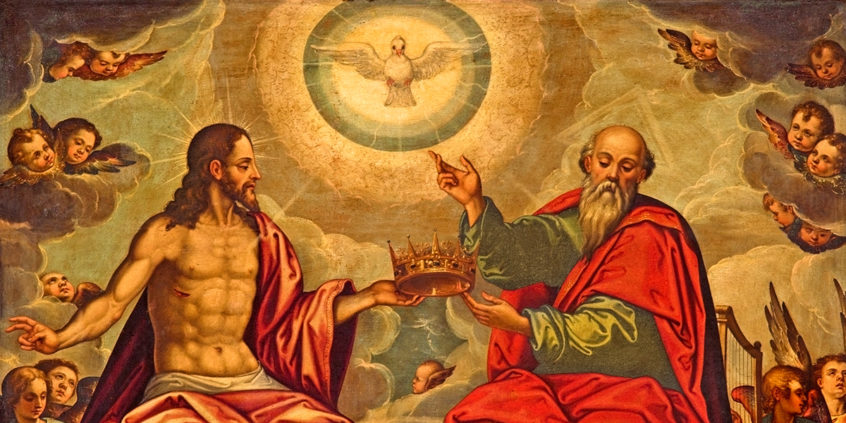
Christendom is an era when Christianity was first formed. It was the belief of Jesus Christ a Jewish Artisan who taught about the Holy Trinity or the Father, Son, and the Holy Spirit as being one God. Over time Christianity allowed its believers to eat meat and drink alcohol, unlike Buddhism and Islam. In this regard, Christendom was cosmopolitan and transcontinental. 
Understanding the Holy Trinity - The Good Shepherd Community
Christianity also gave people hope for a better life through God and promised an after life. Christendom gained most of it's popularity when the Emperor Constantine of Rome embraced the religion. Since Rome had such a large reach, it was easy for the religion to spread.  

Christendom was gaining popularity as the religion of Islam began to grow in Africa and Asia. The civilizations there quickly embraced Islam causing Christendom to contract in its popularity in those regions. Being a Christian in an Islam state was difficult. In fact, Christians were forced to pay a tax so that they would not be persecuted. 
What is Islam? | Ibnulyemen Arabic

Christianity continues to be popular today because of its cross-generational belief system and values. Many of the teachings 1500 years ago can be related to today's modern societies. 

References: 
Robert W. Strayer, Eric W. Nelson - Ways of the World_ A Brief Global History with Sources, Combined Volume (2015, Bedford_St. Martin’s) - libgen.lc.pdf
https://goodshepherdcampus.org/understanding-the-holy-trinity/http://www.ibnulyemenarabic.com/arabic-culture/what-is-islam/

Sunday, June 7, 2020

It was sad to read... Chapter 8

It was sad to read that the Chinese Dynasty was not the same for both men and women. This was so because of the Han Dynasty where is was believed that “the boy leads the boy and the girl follows the boy”. One of the most sad and disturbing reads in Chapter 8 was with the description of Foot Binding.  
The history behind foot binding in ChinaFoot binding allowed for the wrapping or binding the feet of young girls. The purpose of this was to allow the girls feet to remain small so to look more feminine. Many mothers allowed this painful ritual for their daughters. The thought was that it allowed the young girls to remain petite. The procedure would often break the girls feet and cause induced deformation. Small but deformed feet were preferred because of their perceived beauty. As a father of five daughters I can not see doing this to any of my daughters today. It is a true wonder as to how much we have developed as a civilized society; from hunting and gathering to establishing societies to developing religions and rituals. The thought of some of the past customs is truly appalling. 

I found it interesting... Chapter 7

I found it interesting to read that the “Silk Roads” didn’t simply carry goods such as silk, they also carried or facilitated the regionalization of religions. It was interesting to read about the analogy of camel saddle bags carrying cargo and technological advances such as iron tools to those same roads carrying religious beliefs. The silk roads allowed Buddhism and Islam religions to travel thousands of miles across the continent and allowed the influence of those religions to people outside of their origin. 
Another interesting read was that the silk roads apparently prevailed when large states provided security across Eurasia. For over 3000 years the silk roads helped develop commerce and societies as a whole to develop into what they would become. Silk, particularly, allowed the Eurasia people to live a more prestiges life and status among their peers. From the Roman Empire to Chinese elites, they all wanted the precious commodity.

Sunday, May 31, 2020

Chapter 6

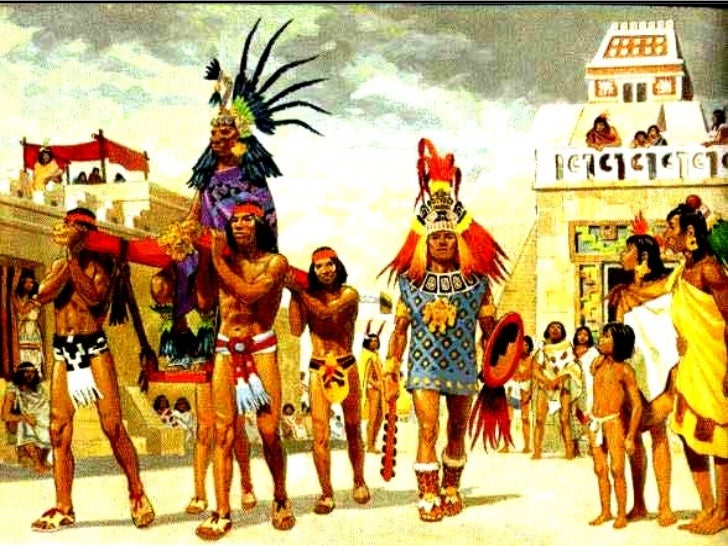
Culture and societies of Africa, the Americas, and Pacific Oceania developed in isolation primarily due to their geographical location on the planet. Several other factors support their isolation and cultural and society development. One of these is the absence of animals that could be domesticated. This meant that very few pastoral people could settle to begin societies. The Americas region only offered llamas and alpacas as a domesticated animal. This would obviously limit the amount of work that could be done with human hands. Another limitation in these three areas, unlike in Eurasia, was the lack of metallurgy development. They were simply not equipped with such tools. These people also lived in smaller groups away from cities and large societies. 
Maya MythosThe Maya people had a view of deific ideals that was similar to their northern neighbors; they saw a god in eve...
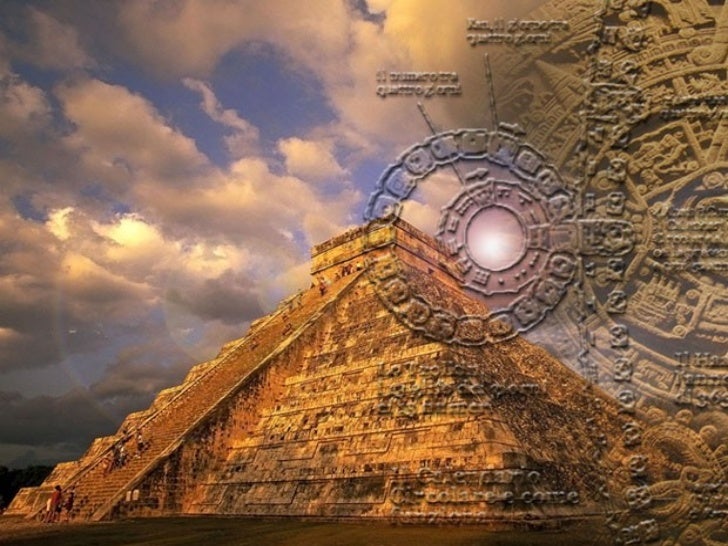
An interesting challenge to the above theory is that even though these three areas were largely isolated to Eurasia they all still managed to create temples, pyramids, palaces, and public plazas just as people did in Eurasia. How could this be? How could three very different regions, continents apart with very different peoples think about creating much of the same monuments? 
Incan EconomicsThe Inca were a very agricultural people, farming for almost all of their food; they grew over two hundred ...
There has to be a link somewhere in the early hunters & gathers and pastoral human kind.    

Chapter 5


Slavery was much more prominent in the Greco-Roman civilization than in India or China because China and India did not depend economically on slaves to perform most agricultural or manufacturing work. In China slavery did not become a major source of labor while in India, the law encouraged slaves to be given their freedom. India too did not depend economically on slavery instead most work was performed by lower Caste people. The two groups had other lesser class people to perform the work.
Han Bio Activity 6: Peasants - HISTORY'S HISTORIESYou are history ...

The Greco-Roman civilization was based on slavery. They often enslaved people after battles and conquests. They did not enslave based on a certain race. Greco-Romans enslaved Egyptian, Syrian, Jew, Greek, Gaul, North African and other people. During a time Roman society had enslaved 2 to 3 million slaves or approximately 33 to 40 % of its population. 
Slaves (con imágenes) | Historia romana, Roma antigua


Its surprising to read that this practice was not as wide spread until the Societies of the Caribbean, Brazil, and southern United States 1,500 to 1,800 years later. It seems history was repeating itself to its own demise.
Caribbean Slave Trade, 18th Century


Photo References:
http://www.historyshistories.com/han-bio-activity-6-peasants.html
https://www.pinterest.ca/pin/241153755030509436/https://media.sciencephoto.com/image/c0439178/800wm/C0439178-Caribbean_Slave_Trade,_18th_Century.jpg

Chapter 4

The appeal of the religious and cultural traditions discussed in this chapter were important to all groups because it allowed the people of those regions to develop a cultural identity by establishing their own religion and moral code. It’s very interesting how as soon as we began to settle and develop societies we moved to creating order and hierarchies. When disorder became prominent, we developed rules and means to remain civilized. Out of the rules and means we developed religion, which directly affected our culture and more compass.   
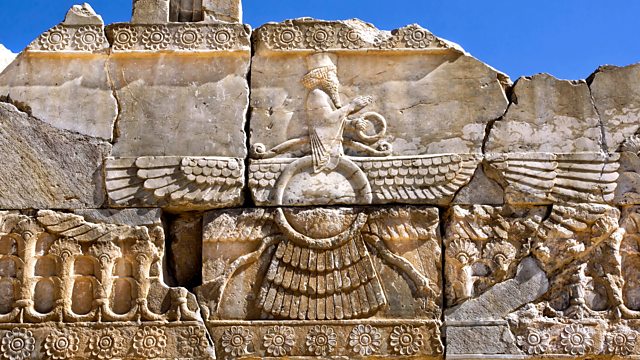
For example, when we consider the Zoroastrianism we begin to see a God of truth, light, and goodness. Zoroastrianism is the beginning of most religions all around the world. It’s specifically, the beginning of Judaism, Christianity, and Islam. The common theme with each is that the religions are based on good and evil as well as a heaven and a hell. These beliefs were important because it gave people some structure to live by and faith. This faith could carry them into the eternal afterlife. 

Photo References:
https://www.bbc.co.uk/programmes/w3cswprt

Thursday, May 28, 2020

Chapter 3 Blog

The second wave empires hold a huge lesson for the present era, which could be completely relevant today and from whom we can really learn from if we pay attention. One of the first things that made me think about where we are headed as Americans is the reference of the United State being the new Roman Empire. It is very possible the United States can stretch itself to thin and want to control the world, that we end up exactly like the Roman Empire; where we have completely isolated the haves and the have not’s to a point where we look to another country in order to live a better life.
 Picture
The second thing that amazed me is how well we compare to Sparta and Athenian democracy. For example: “The council was composed of twenty-eight men over the age of sixty, derived from the wealthier and more influential segment of society, who served for life and provided political leadership for Sparta”. This passage reminds me so much of our own senate for hundreds of years here in the United States where you have to have the means in order to run for office. Most people that are living in the margins can not afford to stop working in order to run for office. The other passage was, “Athenian democracy, however, was different from modern democracy. It was direct, rather than representative, democracy, and it was distinctly limited. Women, slaves, and foreigners, together far more than half of the population, were wholly excluded from political participation.” This passage held true to the United States for many years. It’s only 50 years or so that conditions have changed for the better. We can't forget that our own house of "representatives" did not represent everyone in the United States nor their interests. 

Reference: Ways of the World, Robert W. Strayer, Chapter 3

Sunday, May 24, 2020

It was surprising to learn

It was surprising to learn that ancient civilizations were being established all around the world at about the same time. After the great migration and soon after the ice age the earths seems to have grown more furtile allowing for people to settle their roots and begin to rely on agriculture and animals a lot more then in the past. Mesopotamia, Egypt, and Mesoamerica saw the creation of the first civilizations about five thousand years ago. 


Population growth, architectural achievements, and the beginning of literacy indicated the new era. Several of the civilizations began to document their rituals and history. 


It’s most surprising and intriguing that the first civilizations emerged completely independent from each other in separate parts of the planet not knowing what each other was doing at that moment. It makes you wonder how people think and evolve over time, no matter what their circumstances are. 

References: Robert W. Strayer, Eric W. Nelson - Ways of the World_ A Brief Global History with Sources, Combined Volume (2015, Bedford_St. Martin’s) - libgen.lc.pdf

Tuesday, May 19, 2020

I was disappointed to read

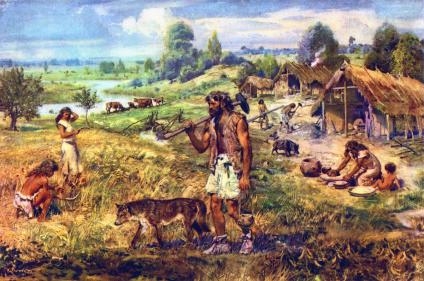
I was disappointed to read that the Paleolithic people came to an end after millions of years on this Earth. They made way for the Neolithic Era. This is a time and place where we moved from hunting and gathering to developing two of the most significant things to-date, agriculture and domesticating animals. When this occurred we did not have the need to roam to gather for food. We were, in a way, forced to settle in one place so we can harvest the fruits of our labor. We used the domesticated animals to help us with the farming but also used them to breed in order to produce more food to consume. This era is also known as the Agricultural Era.
Neolithic Settlement. Illustration by Zdeněk Burian
We can also say that the Neolithic people were one of the first "Civilizations". One of those first more progressive civilizations was founded in Mesopotamia (now known as Middle East.) Although they made much progress, the Neolithic people are the ones who began to change the direction of evolution. When considering the Earth and overall environment, to me, this is clearly one of the disappointments.

Another disappointing things I read was that many historians skip the Paleolithic and Neolithic Eras because these people, apparently, did not write or leave good documentation to study. Instead, historians skip to the more "civilized" eras. I don't see this as being very fair to our true ancestors.

Photos Reference: 
https://www.sutori.com/story/the-neolithic-revolution--hLE5D23gt8Adf1vGTsHHWmtJ

I found it interesting to read

I found it interesting to read that our closest human relative was walking the Earth about 5 to 6 million years ago. Another interesting thing I read was that about 2.3 million years ago our brains developed enough to begin to make hand tools. We also began to control fire. 
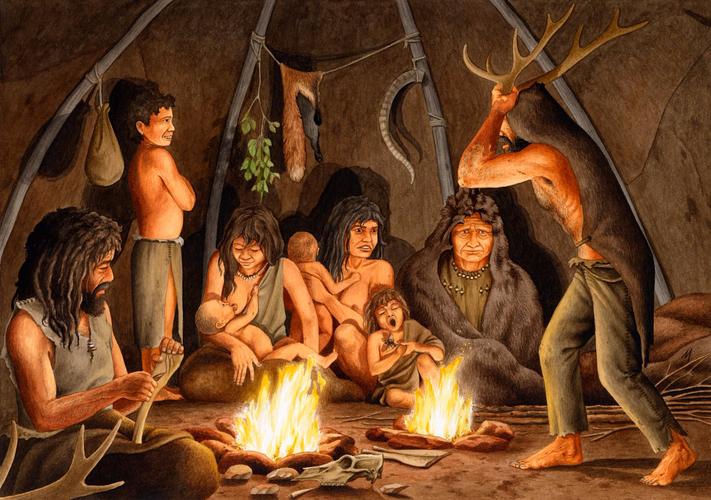
Most recently, about 250,000 years ago we began to migrate out of Africa as Homo Sapiens. The most interesting part is how we have been evolving on Earth, like other plants and animals, for millions of years. As we left Africa, we migrated to Eurasia, Australia and into the Pacific Islands. These people have been the longest to last on Earth to-date. These early beings were called the Paleolithic people and occupied Earth for 95 percent of our total time here.  
Paleolithic People Inside Temporary Dwelling
The Paleolithic people were few in numbers and lived in groups of 25 to 30 in a group. Although they we were small in numbers they employed a division of labor where women gathered and men hunted. Another interesting read was that gathering made up for 70% of their source of food while only 30% of their food source came from hunted meat. They were also Pastoralist, meaning they had some permanent settlements but also participated in seasonal migration in order to sustain them selves. They seemed to be a peaceful people who only lived off the land. Their era ended at about 15,000 B.C.E.  

Photo Reference: 
https://www.sutori.com/story/the-neolithic-revolution--hLE5D23gt8Adf1vGTsHHWmtJ

Sunday, May 17, 2020

Timeline

The following is a timeline of the World History Eras and a brief explanation of each era as I see it fit.

Timeline    Era
13.7 Billion Years Ago    Cosmic Era
5 Billion Years Ago    Gaiac Era
50,000 Years Ago    Paleolithic Era
12,000 Years Ago    Neolithic Era
5,000 Years Ago    Ancient Era
500 Common Era    Classical Era
1,500 Common Era    Modern Era

It makes perfect sense to include the Cosmic, Gaiac and Ecozoic Eras in the Word History timeline. As the chart shows below the Cosmic Era is truly the beginning of the wolds history as we know today. Therefore it makes sense we begin our history 13.7 billion years ago and at that moment in time. The planet went through a long period of time called the "dark ages" during this time many important things occurred to create the solar system, the planets, and life on earth. This era could be considered part of the Gaiac Era. As we know, Gaiac is the Greek Goddess of the Earth. Gaia Philosophy says living organisms on the  planet will affect the nature of their environment in order to make it more suitable for life. This explains why nature created energy, carbon nucleus, and protons and neutrons to form life on Earth.

We can then jump forward to the Paleolithic Era 50,000 years ago or the Old Stone Age when early human kind species roamed the earth hunting and gathering. These species created stone tools to hunt along with other leather and woven goods. Unfortunately, the leather and woven materials were not preserved and simply decayed with time. About 12,000 years ago we transition into the Neolithic Era or New Stone Age. This era saw the first farms and wild crops as well as the domestication of animals. Approximately 5000 years ago or 3000 Common Era (CE) we begin the Ancient Era. This era offers us the first recorded history of human kind. The Ancient Era lasts for thousands of years. As the Ancient Era ends the Classical Era begins at about 500 CE. This era is also known as the Middle Ages and takes place primarily in the Mediterranean Sea. One major invention made during this period is the creation of gunpowder in Asia. We then move to the Modern Era from 1,500 CE to the Industrial Revolution.
We are now entering into a new geological era called the Ecozoic Era. Apparently, the previous geological era called the Cenozoic Era has been terminated by the industrialized human community, predominately in the late 19th century through the 20th and now the 21st century. It's extemely important to include all eight eras so that we may truly understand our history and to be able to put it into context. It is often said, everything ends how it began. When you take the time to analyze the world's timeline and include all eight eras, you can see that if we do not consider the Earth during the Ecozoic Era our planet as we know it could decide to start all over.


Website References:
https://www.inrap.fr/en/periods
https://ecozoictimes.com/what-is-the-ecozoic/what-does-ecozoic-mean/
https://www.bighistoryproject.com/chapters/1#intro
https://www.proquest.com/products-services/pqdtglobal.html