Sunday, May 31, 2020

Chapter 6

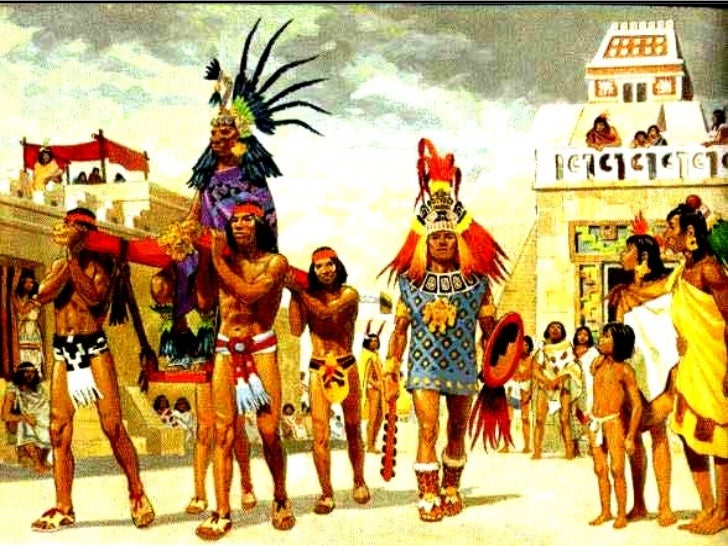
Culture and societies of Africa, the Americas, and Pacific Oceania developed in isolation primarily due to their geographical location on the planet. Several other factors support their isolation and cultural and society development. One of these is the absence of animals that could be domesticated. This meant that very few pastoral people could settle to begin societies. The Americas region only offered llamas and alpacas as a domesticated animal. This would obviously limit the amount of work that could be done with human hands. Another limitation in these three areas, unlike in Eurasia, was the lack of metallurgy development. They were simply not equipped with such tools. These people also lived in smaller groups away from cities and large societies. 
Maya MythosThe Maya people had a view of deific ideals that was similar to their northern neighbors; they saw a god in eve...
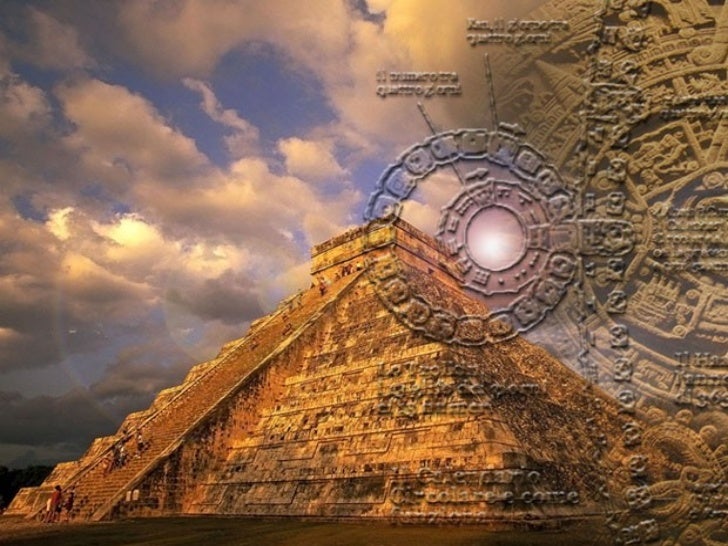
An interesting challenge to the above theory is that even though these three areas were largely isolated to Eurasia they all still managed to create temples, pyramids, palaces, and public plazas just as people did in Eurasia. How could this be? How could three very different regions, continents apart with very different peoples think about creating much of the same monuments? 
Incan EconomicsThe Inca were a very agricultural people, farming for almost all of their food; they grew over two hundred ...
There has to be a link somewhere in the early hunters & gathers and pastoral human kind.    

Chapter 5


Slavery was much more prominent in the Greco-Roman civilization than in India or China because China and India did not depend economically on slaves to perform most agricultural or manufacturing work. In China slavery did not become a major source of labor while in India, the law encouraged slaves to be given their freedom. India too did not depend economically on slavery instead most work was performed by lower Caste people. The two groups had other lesser class people to perform the work.
Han Bio Activity 6: Peasants - HISTORY'S HISTORIESYou are history ...

The Greco-Roman civilization was based on slavery. They often enslaved people after battles and conquests. They did not enslave based on a certain race. Greco-Romans enslaved Egyptian, Syrian, Jew, Greek, Gaul, North African and other people. During a time Roman society had enslaved 2 to 3 million slaves or approximately 33 to 40 % of its population. 
Slaves (con imágenes) | Historia romana, Roma antigua


Its surprising to read that this practice was not as wide spread until the Societies of the Caribbean, Brazil, and southern United States 1,500 to 1,800 years later. It seems history was repeating itself to its own demise.
Caribbean Slave Trade, 18th Century


Photo References:
http://www.historyshistories.com/han-bio-activity-6-peasants.html
https://www.pinterest.ca/pin/241153755030509436/https://media.sciencephoto.com/image/c0439178/800wm/C0439178-Caribbean_Slave_Trade,_18th_Century.jpg

Chapter 4

The appeal of the religious and cultural traditions discussed in this chapter were important to all groups because it allowed the people of those regions to develop a cultural identity by establishing their own religion and moral code. It’s very interesting how as soon as we began to settle and develop societies we moved to creating order and hierarchies. When disorder became prominent, we developed rules and means to remain civilized. Out of the rules and means we developed religion, which directly affected our culture and more compass.   
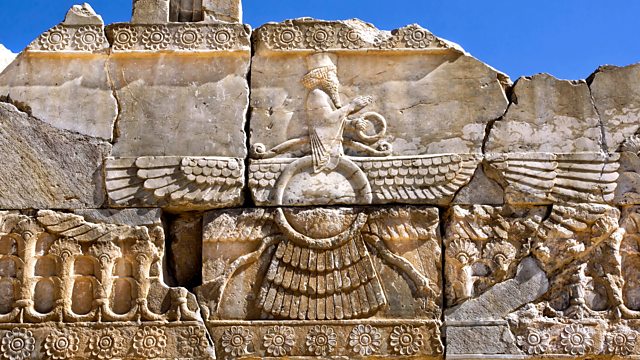
For example, when we consider the Zoroastrianism we begin to see a God of truth, light, and goodness. Zoroastrianism is the beginning of most religions all around the world. It’s specifically, the beginning of Judaism, Christianity, and Islam. The common theme with each is that the religions are based on good and evil as well as a heaven and a hell. These beliefs were important because it gave people some structure to live by and faith. This faith could carry them into the eternal afterlife. 

Photo References:
https://www.bbc.co.uk/programmes/w3cswprt

Thursday, May 28, 2020

Chapter 3 Blog

The second wave empires hold a huge lesson for the present era, which could be completely relevant today and from whom we can really learn from if we pay attention. One of the first things that made me think about where we are headed as Americans is the reference of the United State being the new Roman Empire. It is very possible the United States can stretch itself to thin and want to control the world, that we end up exactly like the Roman Empire; where we have completely isolated the haves and the have not’s to a point where we look to another country in order to live a better life.
 Picture
The second thing that amazed me is how well we compare to Sparta and Athenian democracy. For example: “The council was composed of twenty-eight men over the age of sixty, derived from the wealthier and more influential segment of society, who served for life and provided political leadership for Sparta”. This passage reminds me so much of our own senate for hundreds of years here in the United States where you have to have the means in order to run for office. Most people that are living in the margins can not afford to stop working in order to run for office. The other passage was, “Athenian democracy, however, was different from modern democracy. It was direct, rather than representative, democracy, and it was distinctly limited. Women, slaves, and foreigners, together far more than half of the population, were wholly excluded from political participation.” This passage held true to the United States for many years. It’s only 50 years or so that conditions have changed for the better. We can't forget that our own house of "representatives" did not represent everyone in the United States nor their interests. 

Reference: Ways of the World, Robert W. Strayer, Chapter 3

Sunday, May 24, 2020

It was surprising to learn

It was surprising to learn that ancient civilizations were being established all around the world at about the same time. After the great migration and soon after the ice age the earths seems to have grown more furtile allowing for people to settle their roots and begin to rely on agriculture and animals a lot more then in the past. Mesopotamia, Egypt, and Mesoamerica saw the creation of the first civilizations about five thousand years ago. 


Population growth, architectural achievements, and the beginning of literacy indicated the new era. Several of the civilizations began to document their rituals and history. 


It’s most surprising and intriguing that the first civilizations emerged completely independent from each other in separate parts of the planet not knowing what each other was doing at that moment. It makes you wonder how people think and evolve over time, no matter what their circumstances are. 

References: Robert W. Strayer, Eric W. Nelson - Ways of the World_ A Brief Global History with Sources, Combined Volume (2015, Bedford_St. Martin’s) - libgen.lc.pdf

Tuesday, May 19, 2020

I was disappointed to read

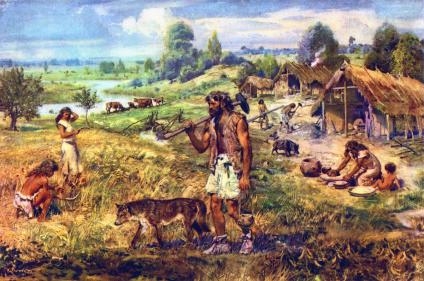
I was disappointed to read that the Paleolithic people came to an end after millions of years on this Earth. They made way for the Neolithic Era. This is a time and place where we moved from hunting and gathering to developing two of the most significant things to-date, agriculture and domesticating animals. When this occurred we did not have the need to roam to gather for food. We were, in a way, forced to settle in one place so we can harvest the fruits of our labor. We used the domesticated animals to help us with the farming but also used them to breed in order to produce more food to consume. This era is also known as the Agricultural Era.
Neolithic Settlement. Illustration by Zdeněk Burian
We can also say that the Neolithic people were one of the first "Civilizations". One of those first more progressive civilizations was founded in Mesopotamia (now known as Middle East.) Although they made much progress, the Neolithic people are the ones who began to change the direction of evolution. When considering the Earth and overall environment, to me, this is clearly one of the disappointments.

Another disappointing things I read was that many historians skip the Paleolithic and Neolithic Eras because these people, apparently, did not write or leave good documentation to study. Instead, historians skip to the more "civilized" eras. I don't see this as being very fair to our true ancestors.

Photos Reference: 
https://www.sutori.com/story/the-neolithic-revolution--hLE5D23gt8Adf1vGTsHHWmtJ

I found it interesting to read

I found it interesting to read that our closest human relative was walking the Earth about 5 to 6 million years ago. Another interesting thing I read was that about 2.3 million years ago our brains developed enough to begin to make hand tools. We also began to control fire. 
Most recently, about 250,000 years ago we began to migrate out of Africa as Homo Sapiens. The most interesting part is how we have been evolving on Earth, like other plants and animals, for millions of years. As we left Africa, we migrated to Eurasia, Australia and into the Pacific Islands. These people have been the longest to last on Earth to-date. These early beings were called the Paleolithic people and occupied Earth for 95 percent of our total time here.  
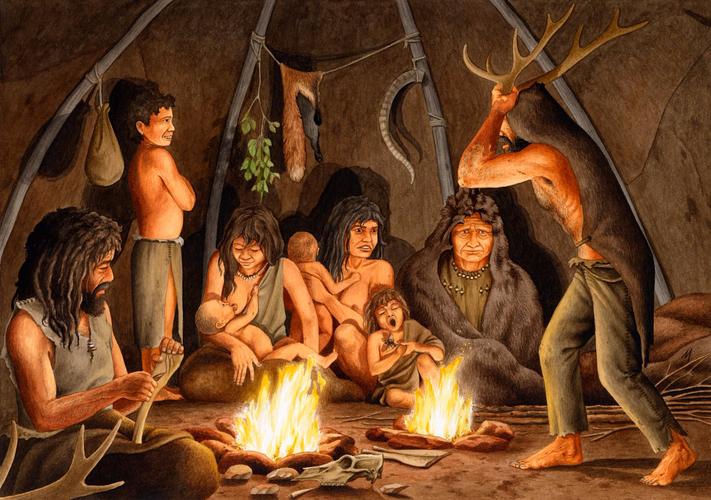
Paleolithic People Inside Temporary Dwelling
The Paleolithic people were few in numbers and lived in groups of 25 to 30 in a group. Although they we were small in numbers they employed a division of labor where women gathered and men hunted. Another interesting read was that gathering made up for 70% of their source of food while only 30% of their food source came from hunted meat. They were also Pastoralist, meaning they had some permanent settlements but also participated in seasonal migration in order to sustain them selves. They seemed to be a peaceful people who only lived off the land. Their era ended at about 15,000 B.C.E.  

Photo Reference: 
https://www.sutori.com/story/the-neolithic-revolution--hLE5D23gt8Adf1vGTsHHWmtJ

Sunday, May 17, 2020

Timeline

The following is a timeline of the World History Eras and a brief explanation of each era as I see it fit.

Timeline    Era
13.7 Billion Years Ago    Cosmic Era
5 Billion Years Ago    Gaiac Era
50,000 Years Ago    Paleolithic Era
12,000 Years Ago    Neolithic Era
5,000 Years Ago    Ancient Era
500 Common Era    Classical Era
1,500 Common Era    Modern Era

It makes perfect sense to include the Cosmic, Gaiac and Ecozoic Eras in the Word History timeline. As the chart shows below the Cosmic Era is truly the beginning of the wolds history as we know today. Therefore it makes sense we begin our history 13.7 billion years ago and at that moment in time. The planet went through a long period of time called the "dark ages" during this time many important things occurred to create the solar system, the planets, and life on earth. This era could be considered part of the Gaiac Era. As we know, Gaiac is the Greek Goddess of the Earth. Gaia Philosophy says living organisms on the  planet will affect the nature of their environment in order to make it more suitable for life. This explains why nature created energy, carbon nucleus, and protons and neutrons to form life on Earth.

We can then jump forward to the Paleolithic Era 50,000 years ago or the Old Stone Age when early human kind species roamed the earth hunting and gathering. These species created stone tools to hunt along with other leather and woven goods. Unfortunately, the leather and woven materials were not preserved and simply decayed with time. About 12,000 years ago we transition into the Neolithic Era or New Stone Age. This era saw the first farms and wild crops as well as the domestication of animals. Approximately 5000 years ago or 3000 Common Era (CE) we begin the Ancient Era. This era offers us the first recorded history of human kind. The Ancient Era lasts for thousands of years. As the Ancient Era ends the Classical Era begins at about 500 CE. This era is also known as the Middle Ages and takes place primarily in the Mediterranean Sea. One major invention made during this period is the creation of gunpowder in Asia. We then move to the Modern Era from 1,500 CE to the Industrial Revolution.
We are now entering into a new geological era called the Ecozoic Era. Apparently, the previous geological era called the Cenozoic Era has been terminated by the industrialized human community, predominately in the late 19th century through the 20th and now the 21st century. It's extemely important to include all eight eras so that we may truly understand our history and to be able to put it into context. It is often said, everything ends how it began. When you take the time to analyze the world's timeline and include all eight eras, you can see that if we do not consider the Earth during the Ecozoic Era our planet as we know it could decide to start all over.


Website References:
https://www.inrap.fr/en/periods
https://ecozoictimes.com/what-is-the-ecozoic/what-does-ecozoic-mean/
https://www.bighistoryproject.com/chapters/1#intro
https://www.proquest.com/products-services/pqdtglobal.html

Early Humans

Human species go back 195,000 years ago but depending on whom you associate most with, you can consider Australopithecus an early ancestor dating back to 4 million years ago. Since Australopithecus was the species who made the leap from walking by using both hands and feet to standing upright and walking on two feet. This made the species more mobile and able to cover more ground.

Australopithecus is considered a species of humans because of the great development of being able to walk upright. Fortunately, they managed to keep the features that allowed them to continue to climb trees so to protect themselves from predators. They soon further developed the ability to run after pray and hunt for food, rather than simply gather grains.

Homo Erectus from about 1.8 to 1.5 million years ago is a species of the human kind and is the first true hunter gather ancestor to humans. Homo Erectus is also the first to migrate out of Africa in large numbers. With the development of longer legs and shorter arms the Homo Erectus began to lose the ability to climb trees. A significant adaptation that may have helped their evolution is when they began to eat cooked meat which could be quickly converted to energy. They also learned to make tools for hunting. All of the above developments allowed them to adapt to changing environments.

It's also believed that we human species may have coexisted with other close evolutionary species such as the Neanderthals and the Denisovansin. It is very possible that evolution overlapped and depending on the region some species developed faster than others. Nonetheless, humans have been evolving since the beginning of time and will continue to do so as our environment changes.    

In terms of range and duration of their presence on the planet earth Homo Erectus and Homo Sapiens, Homo Erectus lived on earth from about 2 million years ago till about 100,000 years ago. Homo Erectus also lived in numerous locations across the world, including South Africa, Kenya, Spain, China, and Indonesia. Homo Sapiens, however, have only been around for 195,000 years and such are still in the early stages of life and development. Modern Homo Sapiens have been recorded as late as 50,000 years ago. Modern Homo Sapiens have migrated to the South Asian continent, Australia, and North America through the Bering Plain as late as 15,000 years ago.

After all of the research and understanding of Big History and the evolution of humans, one has to think if we will make it for millions of years to come, as our ancestors have, or have we become so far developed and smart that we are too dump to see our ecological disruption on earth so far. I believe only time will tell.

Website References: 
https://www.newscientist.com/article/dn9989-timeline-human-evolution/
https://www.discovermagazine.com/planet-earth/just-how-many-extinct-types-of-human-did-our-ancestors-meet
https://www.youtube.com/watch?v=Liv6QCgVie0
https://blogs.ntu.edu.sg/hss-language-evolution/wiki/categories/chapter-15/
https://cpb-us-e1.wpmucdn.com/blogs.ntu.edu.sg/dist/a/853/files/2017/03/1homo-12l0n41.png
https://www.sciencephoto.com/media/903538/view/early-human-modelshttps://humanorigins.si.edu/evidence/human-fossils/species/homo-erectushttps://www.livescience.com/41048-facts-about-homo-erectus.html
https://www2.palomar.edu/anthro/homo2/mod_homo_4.htm
Big History

Big History is the examination of our past, it attempts to explain our present, and it forces us to imagine our future. The framework of Big History looks at Cosmic, Geological, and Biological history. The theory of Big History was first developed by David Christian, in the 1980s. David Christian first taught this course at Macquarie University in Sydney, Australia in 1989. He developed the curriculum of Big History by collaborating with science, humanities, and social science scholars and professionals. Big History has grown to be a joint effort between teachers, scholars, scientists, and Big History supporters. The concept of Big History is made up of eight major thresholds. They include: big bang, stars light up, new chemical elements, earth and the solar system, life on earth, collective learning, agriculture, and the modern revolution. In other words, Big History is an all encompassing way of looking at our history from the beginning or “big bang” to our social structures and ecology of our earth. 

The subject is quite interesting and a complete eye-opener to me. I had heard the term “big history” thrown around from time to time but I had never taken the time to learn about it as I have. When Bill Gates learned about David Christian he was immediately interested and invested his own money to fund the Big History Project. According to Bill Gates, he wishes he would have taken David Christian’s course in school and that it would have prepared him much more and to be able to read the material to other courses and help in his learning overall. 

Bill Gates is so passionate over the subject that he would like to bring Big History to the high schools and I agree. I would encourage everyone to go to www.bighistoryproject.com and learn a wealth of information and perhaps even become a certified “Big Historian”. 


The following is an easy to follow side by side comparison of Converntional History and Big History. One of the biggest lesson and takeaways to me is that conventionally we see history as something that has happened in the past but my new interpretation, thanks to Big History, is that history is the making and we are creating it as we speak. 
Conventional HistoryBig History
5000 BCE to presentBig Bang to present
7,000–10,000 years13.8 billion years
Compartmentalized fields of studyInterdisciplinary approach
Focus on human civilizationFocus on how humankind fits within the universe
Taught mostly with booksTaught on interactive platforms at: Coursera, Youtube's Crash CourseBig History ProjectMacquarie UniversityChronoZoom
MicrohistoryMacrohistory
Focus on trends, processesFocus on analogy, metaphor
Based on a variety of documents, including written records and material artifactsBased on current knowledge about phenomena such as fossils, ecological changes, genetic analysis, telescope data, in addition to conventional historical data
Website References: 
https://www.bighistoryproject.com/home
https://worldcat.org/identities/lccn-n96-115443/
http://pdg.ge.infn.it/2011/reviews/rpp2011-rev-cosmological-parameters.pdf
https://en.wikipedia.org/wiki/Big_History

Friday, May 15, 2020

Introduction Ramirez Sergio

Hello, 

My name is Sergio Ramirez. I'm the son of Jesus and Guadalupe Ramirez, two Mexican immigrants who moved north to the United States to create a better life for their kids. I'm a first generation college pre-grad. I'm also a proud father to three daughters and two sons. I have a passion for horses and the country way of life. Although, I don't own horses or own a ranch, just yet, I'm working hard towards that goal everyday. I'm currently the Superintendent for West Bay Sanitary District. I've been attending NDNU for approximately three years in order to obtain my Bachelors degree in Business Administration and this World History class is my very last one to complete. So here I sit in my (quarantine) back yard taking my final on line class. 


I've been working for local government agencies since the age of 21. When my boss, the head person in charge and District Manager, announce he would be retiring in a few years, I became even more motivated to return to school and finish my degree. I wish my 25 years of experience would have been enough to land his job but it was not, I needed that degree. Everyone plateaus, eventually, without higher education. I'm pleased to let all of my classmates know, those same classmates who have been in class with me until after 10:00 PM that I have been offered the District Manager position. This serves as a testament that hard work really does pay off. My children, wife, and parents are all very proud and I'm forever grateful to them, as well as my classmates, instructors at NDNU, Dr. Madden, and Judy King! for helping me accomplish this and allow me to be one step closer to my optimum goal of owning horses and a ranch. 

I also enjoy running, ridding my road bike, long board, and my motorcycle on sunny days, of course. I also have a passion for teaching others and often put on one day technical training seminars and events, teaching others in my industry to work efficiently and safe. My working career, however, was not always in local government. My first job was sweeping the floor of a body shop in Redwood City at the age of ten. When I turned eleven and a half I became a "paper boy" serving a local route of customers. After that I became a busboy at Pizza N' Pipes and eventually I landed a gig at Malibu Grand Prix (the funnest job ever!) 

When I stop and pause about my introduction and what I can possibly write about, I realize that I've never stopped moving and improving. I'm not sure what the world has in store, particularly with COVID-19, but what I do know is that I will absorb it all and continue to improve personally, professionally, and  to give back however I can. And one day, my family and I will have our horses and ranch.

Thank you for your time! :O)