Thursday, June 25, 2020

Chapter 15 Blog


Nineteenth-century developments in the sciences challenged the faith of the Enlightenment in a way that had not been challenged before. Charles Darwin was one of the first to say that man was an always-evolving creature and that the world would remove some species through natural selection. 


page736image81425952


Conflicting social classes sought to distinct some humans from others. Humans were compared to primal species that could be consumed by sexual thought and aggression. Modern physics and science began to really challenge some religious beliefs. It was hard to argue with sciences in the present day where are most religions solely relied on their own and mythical stories. 

Chapter 14 Blog

European involvement in the world of Asian commerce was driven by a desire for trade. Most of Europe at that time was wrapping up years of war and was looking in a new direction of exploration. From learning about the Asian silk roads to exploration, it was time for Europe to look for new resources around the world.

page672image60435840

Chapter 13 Blog

page644image3804896


The distinctive features of Chinese empire building in the early modern era were the ability to utilize and master the Chinese language and Confucian teaching and the ability to use Chinese bureaucratic techniques to get their way. They also worked on unifying the Chinese people, which worked toward the creation of their vast empire. The Chinese were good at expanding but

only for their own security and not, necessarily for power. 


Wednesday, June 17, 2020

Pastoral People

The Mongols got a bad rap because of the following several points:
  1. The Mongols became infatuated with becoming the rulers of the entire world. 
  2. Their tactics were vicious and crude. In one of their earliest encounters they attacked regular farmers. Additionally, they treated Chinese people like slaves. 
  3. Even though they were conquering many tribes these such tribes were fragile alliances.
  4. Rulers often changed religions for political reasons instead of holding true to their beliefs and values.   
  5. Although woman in some ways were respected they were also not allowed to own their own animals. 
 Photo
The Mongols do, however, deserve some respect for contributing to Eurasian in the following manner: 
  1. It was the Pastoral people who developed who domesticated livestock, specifically, horses. The Mongols were able to domesticate horse to a point where they use them in battle allowing them to superiority over other tribes. 
  2. The developed the "Fictive Kinship" which allowed them to make alliances with other than blood related relatives.
  3. Mongols unified the unruly Mongol Nation under one supreme leader. 
  4. Mongol women had a higher living status. Widows could remarry, initiate divorce, and were involved in productive labor. 
  5. They valued and stressed equity within their people and relied on other tribes to trade goods, to a point where they revitalized the silk roads. 

References: 
Robert W. Strayer, Eric W. Nelson - Ways of the World_ A Brief Global History with Sources, Combined Volume (2015, Bedford_St. Martin’s) - libgen.lc.pdfhttps://mongolssection3group1.weebly.com/mongol-reputation.htmlhttp://factsanddetails.com/asian/cat65/sub423/entry-5256.html

Tuesday, June 16, 2020

Christendom

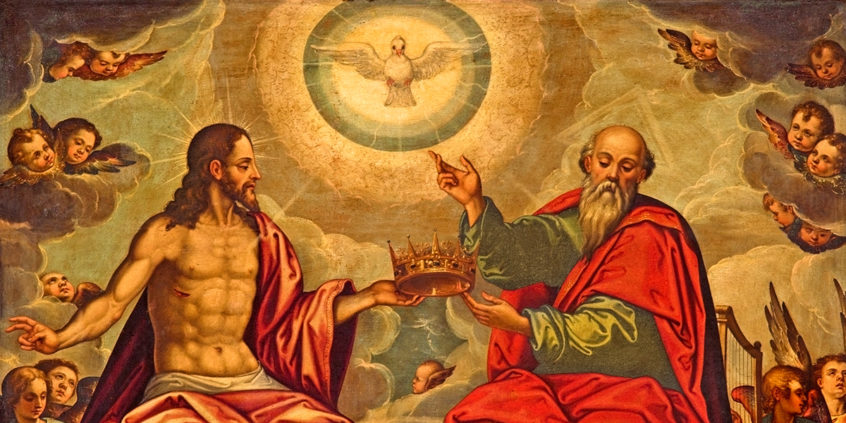
Christendom is an era when Christianity was first formed. It was the belief of Jesus Christ a Jewish Artisan who taught about the Holy Trinity or the Father, Son, and the Holy Spirit as being one God. Over time Christianity allowed its believers to eat meat and drink alcohol, unlike Buddhism and Islam. In this regard, Christendom was cosmopolitan and transcontinental. 
Understanding the Holy Trinity - The Good Shepherd Community
Christianity also gave people hope for a better life through God and promised an after life. Christendom gained most of it's popularity when the Emperor Constantine of Rome embraced the religion. Since Rome had such a large reach, it was easy for the religion to spread.  

Christendom was gaining popularity as the religion of Islam began to grow in Africa and Asia. The civilizations there quickly embraced Islam causing Christendom to contract in its popularity in those regions. Being a Christian in an Islam state was difficult. In fact, Christians were forced to pay a tax so that they would not be persecuted. 
What is Islam? | Ibnulyemen Arabic

Christianity continues to be popular today because of its cross-generational belief system and values. Many of the teachings 1500 years ago can be related to today's modern societies. 

References: 
Robert W. Strayer, Eric W. Nelson - Ways of the World_ A Brief Global History with Sources, Combined Volume (2015, Bedford_St. Martin’s) - libgen.lc.pdf
https://goodshepherdcampus.org/understanding-the-holy-trinity/http://www.ibnulyemenarabic.com/arabic-culture/what-is-islam/

Sunday, June 7, 2020

It was sad to read... Chapter 8

It was sad to read that the Chinese Dynasty was not the same for both men and women. This was so because of the Han Dynasty where is was believed that “the boy leads the boy and the girl follows the boy”. One of the most sad and disturbing reads in Chapter 8 was with the description of Foot Binding.  
The history behind foot binding in ChinaFoot binding allowed for the wrapping or binding the feet of young girls. The purpose of this was to allow the girls feet to remain small so to look more feminine. Many mothers allowed this painful ritual for their daughters. The thought was that it allowed the young girls to remain petite. The procedure would often break the girls feet and cause induced deformation. Small but deformed feet were preferred because of their perceived beauty. As a father of five daughters I can not see doing this to any of my daughters today. It is a true wonder as to how much we have developed as a civilized society; from hunting and gathering to establishing societies to developing religions and rituals. The thought of some of the past customs is truly appalling. 

I found it interesting... Chapter 7

I found it interesting to read that the “Silk Roads” didn’t simply carry goods such as silk, they also carried or facilitated the regionalization of religions. It was interesting to read about the analogy of camel saddle bags carrying cargo and technological advances such as iron tools to those same roads carrying religious beliefs. The silk roads allowed Buddhism and Islam religions to travel thousands of miles across the continent and allowed the influence of those religions to people outside of their origin. 
Another interesting read was that the silk roads apparently prevailed when large states provided security across Eurasia. For over 3000 years the silk roads helped develop commerce and societies as a whole to develop into what they would become. Silk, particularly, allowed the Eurasia people to live a more prestiges life and status among their peers. From the Roman Empire to Chinese elites, they all wanted the precious commodity.